WATER FILTRATION
Water filtration systems
Reverse osmosis, filtration stages and water waste ratios: what each system actually removes, what it costs to run, and which installation limits decide the choice before the brand does.
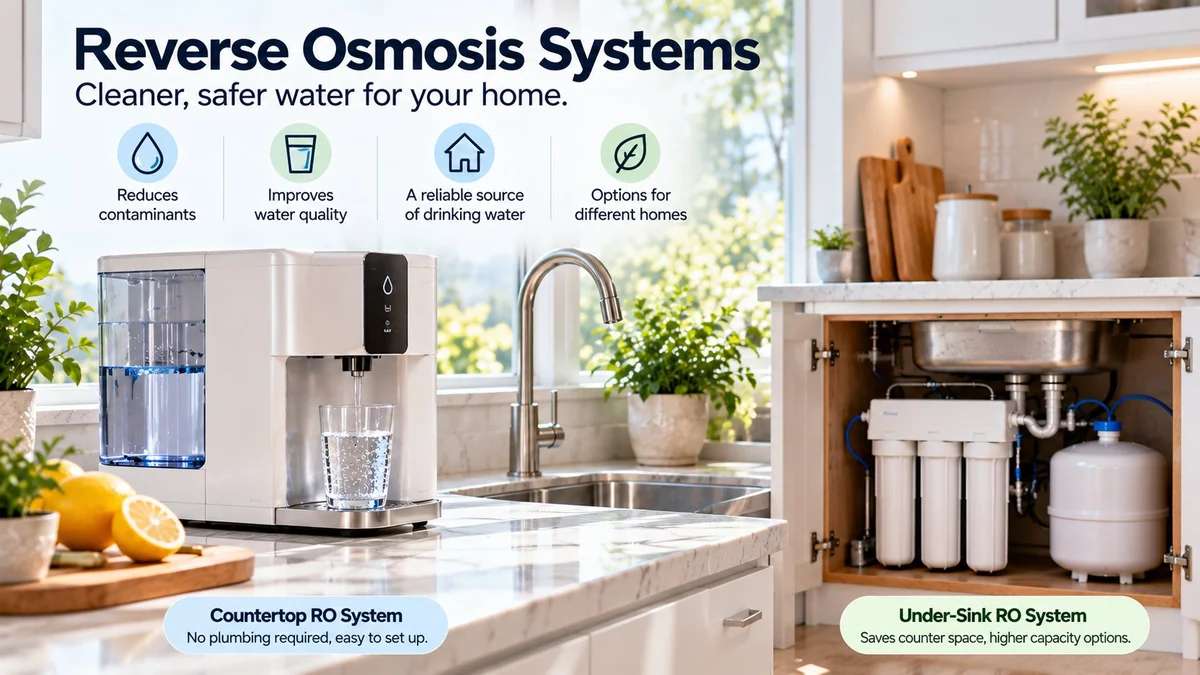
START HERE
Water filtration, in the order it decides the purchase.
Three questions settle most of it before a brand is even mentioned: where the system can physically go, what you need removed, and how much water your household actually drinks.
Best Reverse Osmosis Systems
Six under-sink and countertop RO systems compared on filtration stages, installation limits, rated output and cartridge cost.
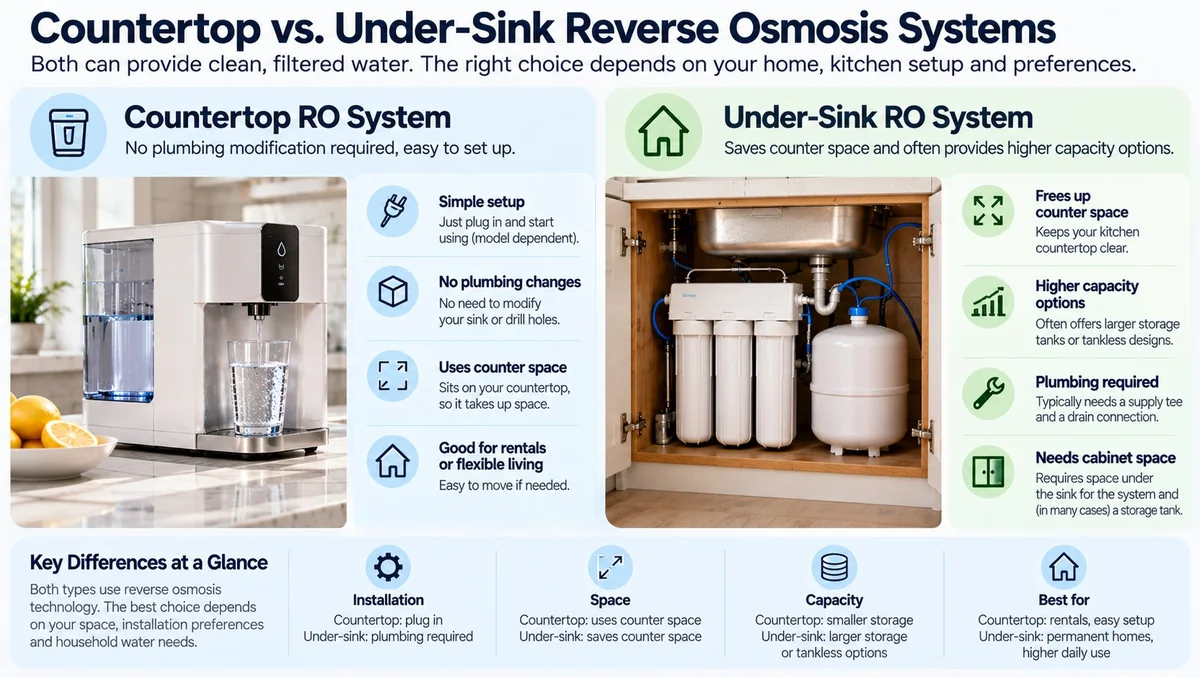
Decision 1Countertop or under-sink?
Countertop units need no plumbing. Under-sink units reclaim the worktop but need a supply tee, a drain saddle and cabinet space. This is usually the limit that decides it.
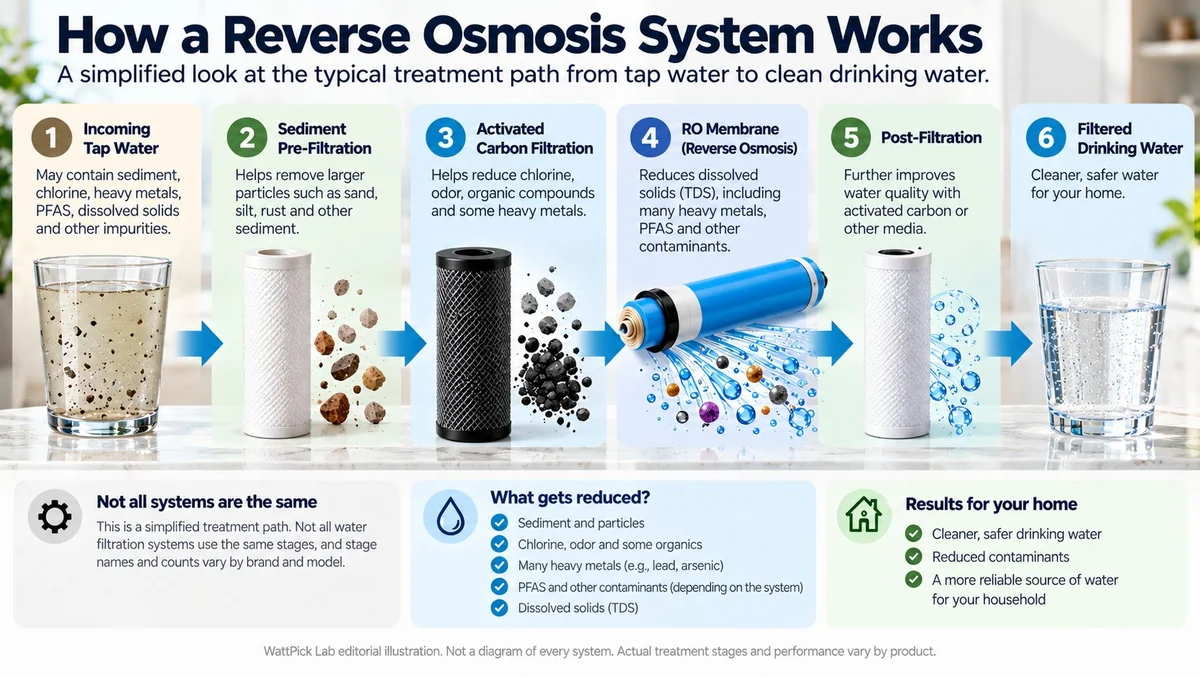
Decision 2What should a water filter remove?
Sediment, chlorine, lead, PFAS and dissolved solids each need a different filtration stage. The contaminant list picks the technology — the brand comes much later.
SHOP BY BUDGET
Start with what you’re comfortable spending.
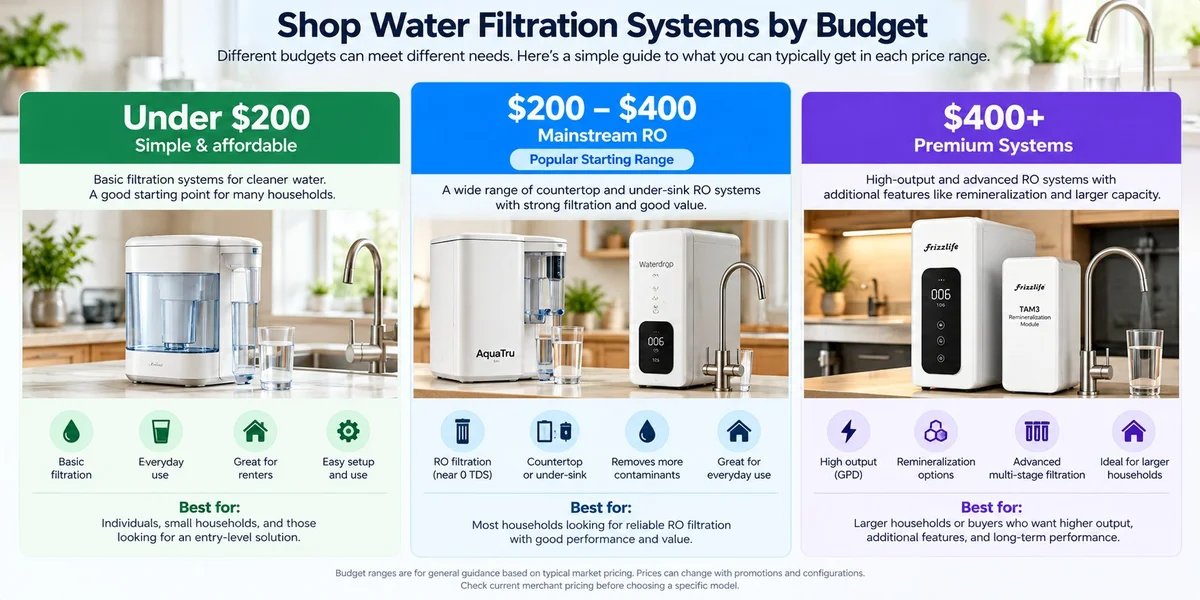
Under $200
Simple & affordable
Basic filtration and entry-level systems
Renters, small households and a first drinking-water upgrade.
Worth checking
Explore entry-level systems$200–$400
Mainstream RO
Countertop and under-sink RO
Most households that want reliable RO filtration without premium cost.
Worth checking
Explore mainstream RO$400+
Premium systems
High-output and advanced RO
Larger households that want higher output, remineralization and capacity.
Worth checking
Explore high-output systemsPrices change with promotions and configurations. Budget ranges are shopping guides, not live price guarantees. Check current merchant pricing before choosing a model.
START WITH YOUR SITUATION
Three questions before any system.
These three questions narrow the system type before you compare specific models and brands. They apply to every guide in this category.
Countertop or under-sink?
Countertop systems need no plumbing and no drilling. Under-sink systems reclaim the worktop but need a supply tee, a drain saddle and space in the cabinet.
What contaminants do you want to remove?
Sediment, chlorine, lead, PFAS and dissolved solids need different filtration stages. The contaminant list decides the technology before the product does.
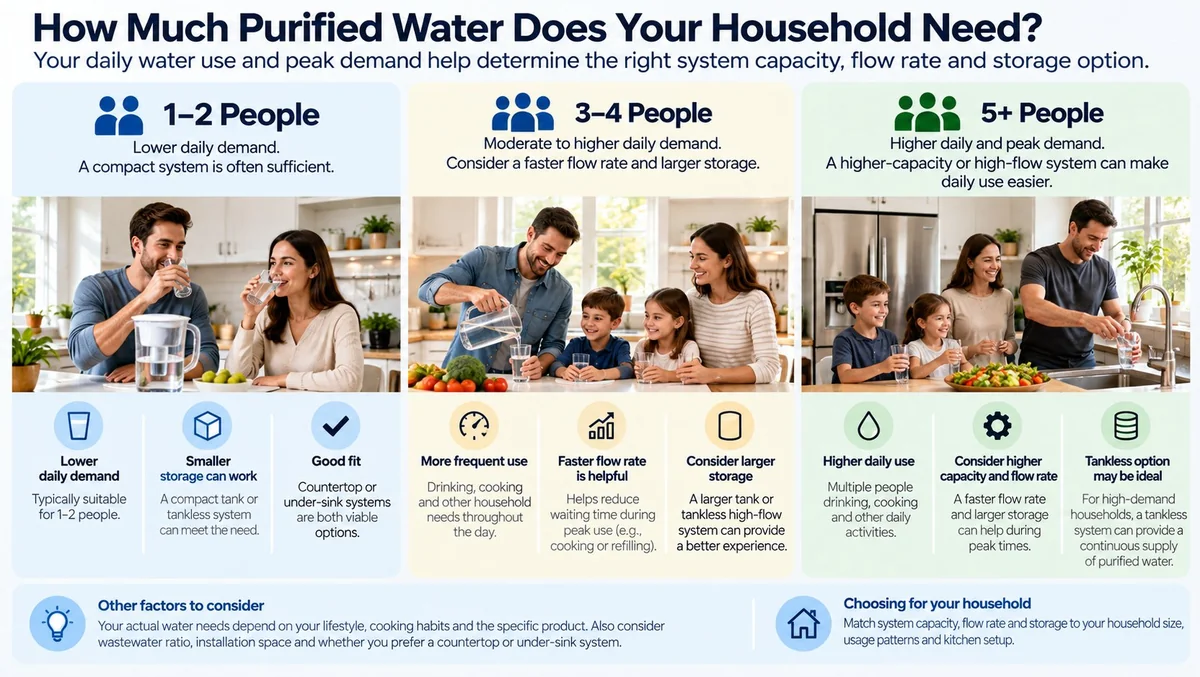
How much purified water does your household need?
Daily demand and peak draw set the tank size or the flow rate you actually need — and decide whether wastewater ratio matters for your area.
PRODUCT RESEARCH
Research a system, then compare it.
Start from a system we have researched, then compare its specifications and installation requirements. Every review below is built from manufacturer specifications and stated assumptions.
WATERDROP
2 published reviews
Tankless under-sink RO with a high rated daily output, plus a countertop CoreRO line for kitchens where plumbing is not an option.
Research and pick
Compare this system
FRIZZLIFE
2 published reviews
Tankless RO with remineralization — from the 600 GPD PD600-TAM3 to the non-electric 900 GPD M800-new.
Research and pick
Compare this system
AQUATRU
Review in research
Countertop RO with no plumbing and no drilling — the option when an under-sink installation is not possible.
Research and pick
Countertop review — in research
Countertop vs under-sink — in research
For taste, odour and contaminant-reduction claims, check the exact model’s manufacturer documentation and certification scope.