COMPARISON / 1kWh CLASS / US MODELS
Anker SOLIX C1000 Gen 2 vs Jackery Explorer 1000 v2: Which 1kWh Station Fits Your Trip?
Roughly the same stored energy, two different bets: Anker spends it on output, charging speed and a 600W solar ceiling. Jackery spends it on being a lighter carry and a simpler fixed-capacity station.
Affiliate disclosure: WattPick Lab may earn a commission from qualifying purchases through affiliate links, at no additional cost to you. Editorial conclusions are independent of commissions. How our links work.
30-SECOND ANSWER
Jackery for the lighter carry. Anker for everything the station has to do.
Both land in the same class at roughly 1kWh, so capacity will not settle this. The published numbers disagree in three places that change what you can run and how fast you can refill.
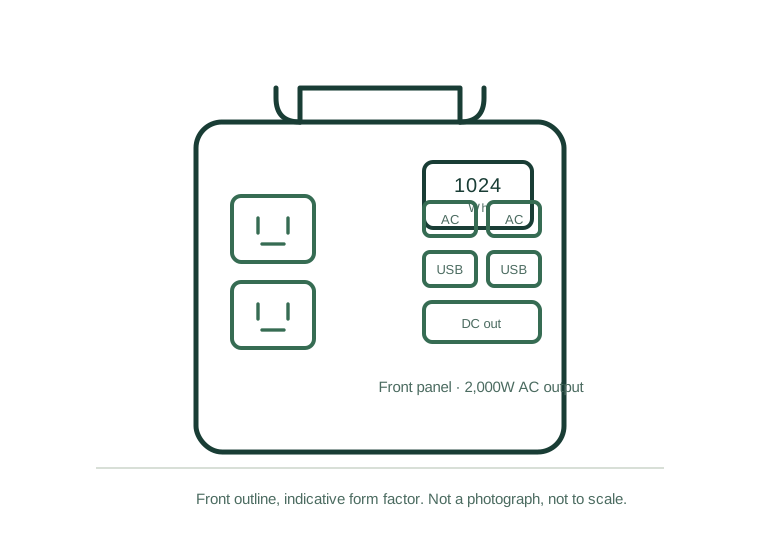
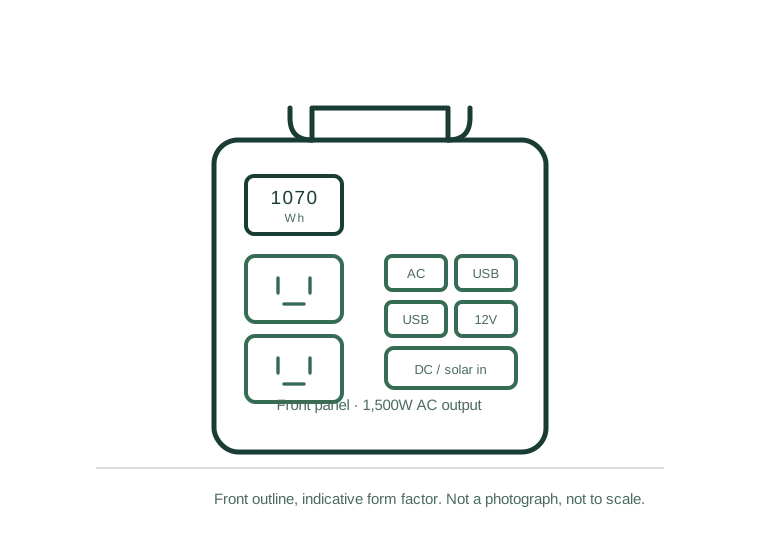
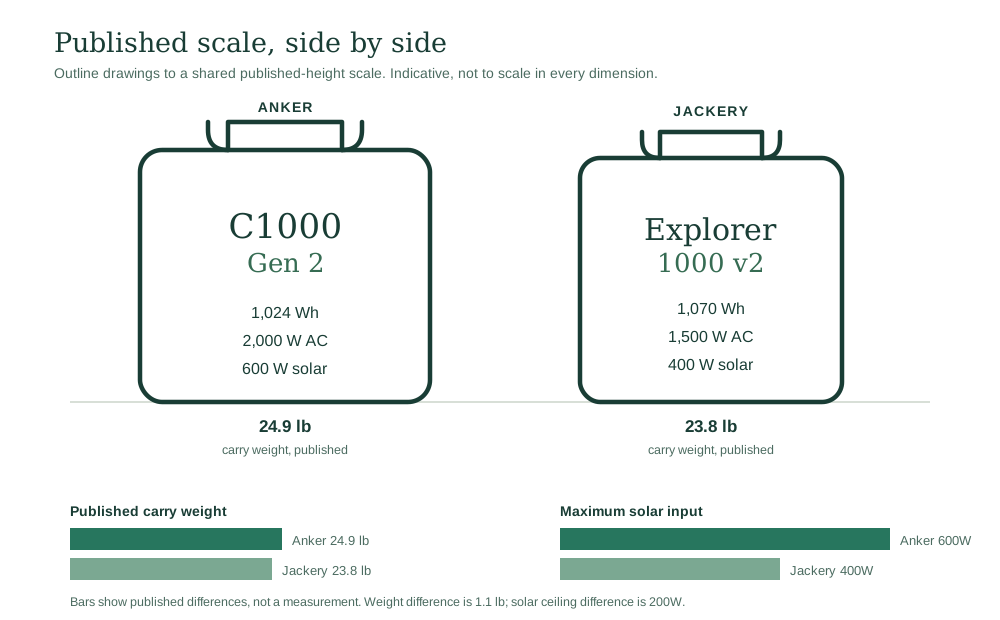
Side-by-side specifications
Published figures from Anker and Jackery. Where the difference is small, this page says so; where it changes what you can run, it gets its own section below.
| Specification | Anker SOLIX C1000 Gen 2 | Jackery Explorer 1000 v2 |
|---|---|---|
| Nominal capacity | 1,024Wh | 1,070Wh |
| Battery chemistry | LiFePO₄ (LFP) | LiFePO₄ (LFP) |
| Rated AC output | 2,000W | 1,500W |
| Peak / surge output | Up to 3,000W peak | 3,000W advertised surge |
| Maximum AC charging | Up to 1,600W UltraFast | App-controlled charging modes |
| Advertised full AC charge | About 49 minutes (Anker claim) | Not published as a single figure |
| Maximum solar input | Up to 600W | Up to 400W |
| Weight | About 24.9 lb | About 23.8 lb |
| Dimensions | 15.12 × 8.19 × 9.61 in | Not itemised here |
| Battery expansion | Not supported | Not supported |
| Cycle life | 4,000 cycles to 80%+ (Anker claim) | 4,000 cycles to 70%+ (Jackery claim) |
Sources:
1. AC output: 2,000W vs 1,500W
Anker’s 2,000W continuous rating gives more headroom than Jackery’s 1,500W. Check simultaneous demand and appliance startup requirements. Both remain roughly 1kWh stations; a more powerful inverter does not promise longer runtime.
2. Recharging: a 49-minute mains claim vs an app-managed Jackery
Anker lists up to 1,600W UltraFast AC input and about 49 minutes to full under stated conditions. Jackery’s charging mode is app-managed; compare the exact selected mode and supply rather than unmatched marketing times.
Solar is the clearer input difference: Anker up to 600W, Jackery up to 400W. Match voltage/current limits and actual array yield. The ceiling only helps when your compatible panels can supply it.
3. Portability: a 1.1 lb gap, and a real one
Jackery lists 23.8 lb against Anker’s 24.9 lb: about 1.1 lb lighter. Both are vehicle-based camping carry choices. Compare the whole panel/cable kit and storage dimensions before giving the small station-weight difference too much importance.
4. Expansion: neither station grows
Neither model supports a matching expansion battery. Jackery’s 1,070Wh and Anker’s 1,024Wh are a small nominal difference within the same class. If your daily consumption already exceeds the available budget between recharges, choose another capacity plan instead of expecting either station to grow.
FINAL DECISION
Jackery is lighter. Anker offers more output and charging headroom.
Choose Anker when 2,000W output or its 600W solar ceiling solves your constraint. Choose Jackery when the lighter 23.8 lb carry matters and 1,500W/400W fits the plan. Neither provides matching battery expansion; compare the required kit and current price.
Still deciding?
The split that settles most cases is output: 2,000W against 1,500W. If a third station is still on your list, compare it directly.
Other 1kWh pairings
Want one model in full?
Sources & editorial method
Sources & methodology
Research checked September 30, 2026. This comparison covers the US versions of both models. We use official documentation for specifications and label every calculation as an estimate. Advertised recharge times are manufacturer claims under stated ideal conditions and are not guaranteed outdoor performance.
Check live offers and bundle contents at the retailer. Cycle-life endpoints are manufacturer laboratory claims with different thresholds and are not directly comparable.