BLUETTI Elite 10 Review (2026): Small, Light, and Built for Everyday Electronics
Affiliate disclosure: We may earn a commission when you buy through these links, at no additional cost to you. How our links work.
Quick verdict
Choose Elite 10 when carrying less matters and your devices fit a small energy budget. BLUETTI lists 128Wh, 200W AC output, up to 100W USB-C and about 3.97 lb. It suits phones, cameras, lights and occasional laptop charging.
Skip it for kettles, heaters, most cooking appliances or a long trip with no recharge opportunity. The 200W output limit and 128Wh battery are separate constraints: a device can fit the inverter but exhaust the battery quickly.
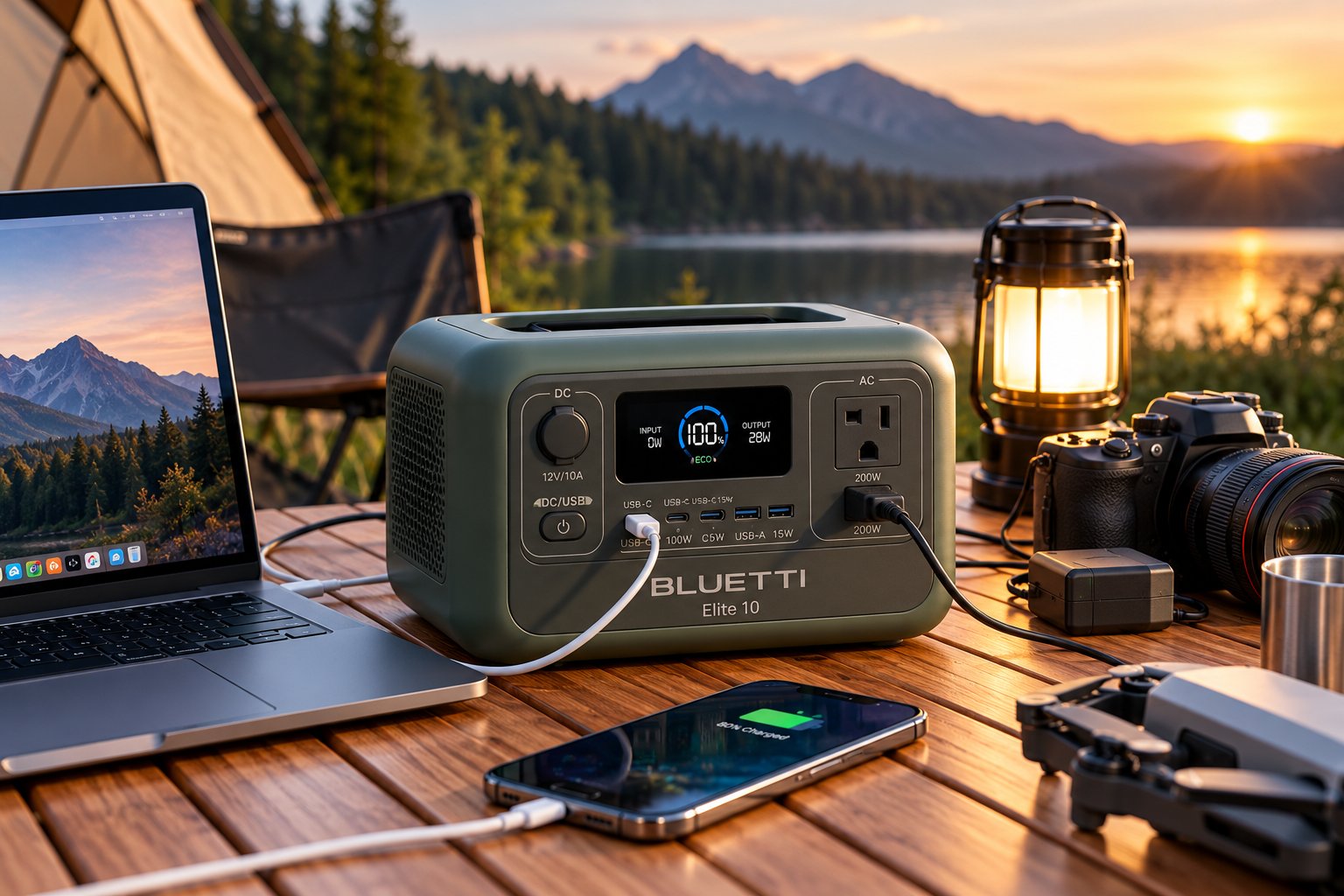
| Specification | BLUETTI Elite 10 |
|---|---|
| Capacity | 128Wh |
| AC Output | 200W |
| Surge | 300W |
| USB-C | Up to 100W |
| Solar Input | Up to 100W |
| Battery | LiFePO₄ |
| Cycle Life | 3,000+ to 80% |
| UPS | ≤10ms |
| Weight | 3.97 lb |
| Warranty | 3 years |
Size the device budget
Add each device’s energy use between charges. A planning allowance of 80% usable nominal energy gives roughly 102Wh before any additional reserve. At 20W average demand that is about five hours; it is an illustrative calculation, not measured runtime.
Use compatible USB/DC outputs where they suit the device. The 100W USB-C headline is a maximum capability, not the power every laptop will accept. Check the device’s charging requirement and cable.
Check how you will recharge
The published solar ceiling is up to 100W. Match the panel’s electrical limits and connector to the manual. Actual generation depends on conditions, so a 100W panel does not guarantee 100Wh each hour.
A small station makes sense when outlet access, vehicle charging or a compatible panel can replenish the modest budget. Confirm the supported charging method and included equipment before comparing bundle prices.
Portability has clear limits
Low weight is the attraction, but it does not expand the single AC outlet’s 200W capability. Do not assume a surge rating supports sustained high demand. Keep the unit dry; this is not a waterproof power source.
The published LFP cycle rating is a conditional capacity-retention figure, not a prediction of calendar life. For frequent use, compare the exact cycle endpoint, warranty and recharge routine rather than the chemistry label alone.
When Elite 30 V2 is worth the upgrade
Elite 30 V2 steps up to 288Wh and 600W. Choose it when 128Wh cannot cover the device budget or your compatible AC load exceeds 200W, and when the heavier package is acceptable.
If the only job is USB charging, compare a suitable power bank before carrying an inverter. If the job is a fridge plus work devices, use the larger capacity guide. Read the small-model comparison.
The buying decision
Buy Elite 10 for a known small-load routine and an easier carry. Upgrade only when the required energy or continuous output crosses its limits. Check the exact regional model, current price and charging accessories before ordering.
Sources & editorial method
This review uses manufacturer documentation, certification records where available, and product specifications. Performance can vary with installation and operating conditions. Runtime and cost examples are labelled planning calculations. Check the exact US model, current documentation and seller configuration before ordering.
Sources: BLUETTI Elite 10 product page ↗ and Elite 30 V2 product page ↗. Manufacturer specifications may change; check the exact regional model before purchase.